
Why Some Trump Supporters Remain Loyal: Identity, Policy, and Evidence
Continued support for Donald Trump is widely debated because voters can weigh policy, economic conditions, immigration, identity, culture, trust, and party loyalty differently.
No single factor explains why different voters continue to support Trump, and economic concerns remain important alongside other priorities. Critics often argue that some voters are voting against their own interests, but many supporters see their vote as a defense of identity, culture, security, religion, tradition, and belonging.
The phrase voting against your own interests usually means supporting candidates or policies that appear to work against your own economic, healthcare, labor, or personal well being.
Voting decisions can reflect economic interests as well as culture, religion, security, party identification, and views about national direction.
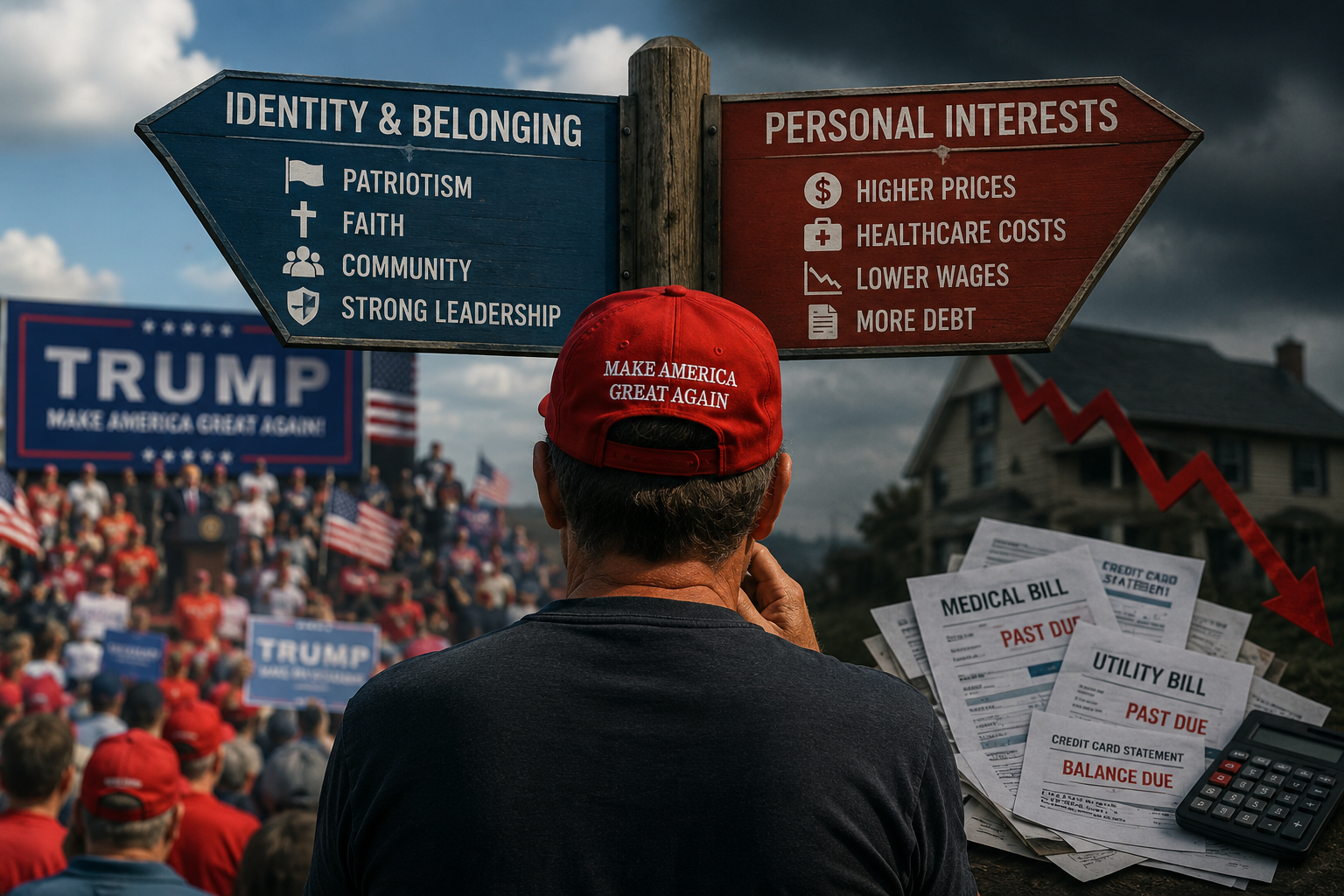
Why Trump Supporters Still Support Trump Even When Critics Say It Hurts Them
One reason why Trump supporters still support Trump is that political identity can become stronger than policy details.
Some supporters describe Trump as a change candidate who represents people they believe have been ignored by political and cultural institutions.
A voter concerned about inflation, healthcare, jobs, or wages may also value Trump’s confrontational style, cultural positions, or promises to change Washington.
1. Identity Can Interact With Policy Priorities
Politics is not always a spreadsheet. People often vote for who they believe represents them.
For some voters, support for Trump can express defiance, patriotism, religious or cultural priorities, anti-establishment anger, or resistance to social change.
Those identity considerations can coexist with—and sometimes outweigh—particular policy concerns.
2. Fear Changes Political Priorities
Perceived threats can change which political priorities feel most urgent.
Some supporters describe immigration, crime, globalization, cultural change, religious influence, or government power as major concerns; polling is needed to measure how widely each view is held.
When people feel threatened, they often prioritize security, strength, and identity over economics.
3. Media Ecosystems Reinforce Loyalty
Another reason why Trump supporters still support Trump is that modern media lets people build entire information worlds around themselves.
Repeated exposure within partisan media ecosystems can reinforce existing beliefs, although audiences and platforms are not uniform.
When people repeatedly hear that Trump is being unfairly attacked, the media lies constantly, Democrats are destroying America, and criticism of Trump is fake news, they become more resistant to outside evidence.
4. Community Pressure Is Real
Politics is often tied to family, church, friends, work, and community identity.
In some communities, supporting Trump is not just a political choice. It becomes part of belonging.
Rejecting that identity can create conflict with family members, friends, church groups, coworkers, and entire communities.
5. Emotional Satisfaction Beats Policy Details
Trump’s communication style places strong emphasis on conflict, confidence, grievance, and identifying opponents.
He identifies enemies, creates conflict, projects confidence, and gives supporters a sense that someone is fighting for them.
For some supporters, that emotional connection may matter alongside—or more than—particular policy details and long-term outcomes.
6. Insults Make the Conversation Worse
The phrase voting against your own interests often sounds insulting.
Many voters hear it as, “You are too stupid to understand your own life.”
Once people feel attacked personally, they stop listening.
A better approach is focusing on measurable outcomes. Did wages improve? Did healthcare costs improve? Did prices go down? Did local jobs return? Did promises match reality?
7. Politics Involves Emotion As Well As Policy
Most people want dignity, belonging, security, meaning, and identity.
Political movements that tap into those emotions can maintain loyalty even when supporters experience economic hardship or contradictory outcomes.
That helps explain why Trump supporters still support Trump even when critics argue that some policies do not improve their material lives.
Why Voting Against Your Own Interests Is Hard To Discuss
The idea of voting against your own interests is hard to discuss because people disagree about what “interests” means.
One person may define interests as wages, healthcare, taxes, jobs, and retirement security.
Another person may define interests as religion, immigration, gun rights, cultural identity, national pride, and opposition to people they distrust.
Those voters may not believe they are voting against their own interests. They may believe they are protecting the interests that matter most to them.
FAQ: Why Trump Supporters Still Support Trump
Why do Trump supporters still support Trump?
Trump supporters may continue supporting him because of identity, fear, loyalty, cultural values, media reinforcement, distrust of institutions, and emotional connection.
What does voting against your own interests mean?
It usually means supporting candidates or policies that appear to work against a voter’s economic, healthcare, labor, or personal well being.
Is voting always based on economic interests?
No. Voters can prioritize identity, culture, religion, security, immigration, social issues, or belonging alongside direct economic outcomes.
Why do political arguments about this often fail?
They often fail because people feel insulted, judged, or attacked. Evidence based questions usually work better than personal attacks.
Related Evidence Matters Pages
Sources For The Curious
How we rate claims: See the Evidence Matters Verdict System