20 Shocking January 6 Election Lie Promoters Exposed
January 6 election lie is the phrase that describes the false claim that the 2020 presidential election was stolen, rigged, or corrupted badly enough to change the outcome.
The January 6 election lie spread through politicians, lawyers, media figures, organizers, podcasts, pressure campaigns, and online networks before exploding into one of the most serious attacks on American democracy in modern history.
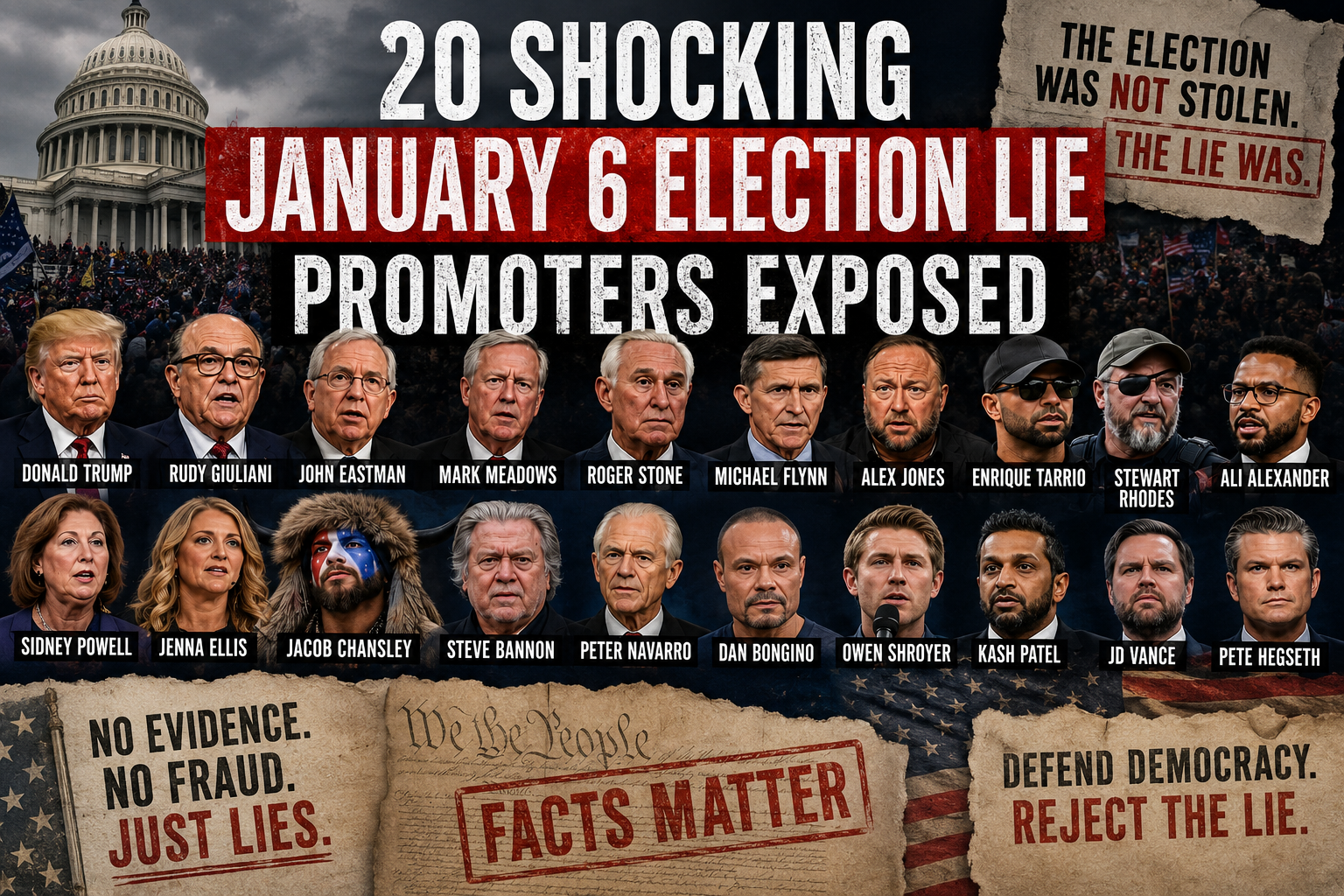
Image: 20 prominent figures connected to the January 6 election lie and Stop the Steal movement.
What Was the January 6 Election Lie?
The January 6 election lie was the repeated false claim that Donald Trump actually won the 2020 presidential election and that Joe Biden’s victory was caused by fraud, corruption, or a stolen election scheme.
That claim was rejected by courts, state officials, recounts, audits, election administrators, and Trump’s own Justice Department.
Not every person on this list played the same role. Some were political leaders. Some were lawyers. Some were media figures. Some were organizers. Some were extremist group leaders. Some entered the Capitol. Their actions were different, but each became connected to the larger story of how the January 6 election lie spread.
How the January 6 Election Lie Spread
The January 6 election lie spread because powerful people repeated it before the evidence existed. Supporters heard it from politicians, lawyers, influencers, podcasts, livestreams, rallies, and social media accounts. Repetition made the claim feel true to people who wanted it to be true.
This page separates direct quotes from documented conduct. If a statement is in quotation marks, it should be treated as a direct quote. If it is described as documented conduct, it summarizes a reported action or role without pretending to quote the person word for word.
Donald Trump and the January 6 Election Lie
Role: Central political figure tied to post election fraud claims and the January 6 rally.
“If you count the legal votes, I easily win. If you count the illegal votes, they can try to steal the election from us.”
Why it matters: Trump’s repeated fraud claims became the central fuel behind the January 6 election lie.
Source: Trump White House Archives
Rudy Giuliani and the January 6 Election Lie
Role: Former Trump attorney and one of the most visible public promoters of election fraud claims.
“Let’s have trial by combat.”
Why it matters: Giuliani helped push election fraud claims through lawsuits, press conferences, and public speeches before January 6.
Source: Rev transcript
John Eastman and the January 6 Election Lie
Role: Attorney connected to legal theories involving alternate electors and delaying Electoral College certification.
Documented conduct: Eastman promoted legal arguments tied to challenging certified election results and became a central figure in investigations into the pressure campaign involving Vice President Mike Pence.
Why it matters: His role gave the January 6 election lie a legal looking framework.
Source: The Guardian
Mark Meadows and the January 6 Election Lie
Role: Trump’s White House Chief of Staff during the post election period.
Documented conduct: Meadows communicated with lawmakers, organizers, and political allies about efforts to challenge or overturn the 2020 election results.
Why it matters: Meadows was a key White House figure during the period when the January 6 election lie moved from rhetoric into pressure campaigns.
Source: The Guardian
Roger Stone and the January 6 Election Lie
Role: Longtime Trump associate and political operative.
Documented conduct: Stone was associated with Stop the Steal style organizing and activists involved in post election challenges.
Why it matters: Stone’s network overlapped with figures and groups active around January 6 and election denial activism.
Source: WRAL and CNN reporting
Michael Flynn and the January 6 Election Lie
Role: Former National Security Advisor and prominent election denial figure.
Documented conduct: Flynn publicly supported efforts to challenge the 2020 election outcome and amplified claims that Biden’s victory was illegitimate.
Why it matters: Flynn’s public influence helped spread the January 6 election lie among Trump supporters.
Alex Jones and the January 6 Election Lie
Role: Conspiracy media figure who promoted election fraud claims and appeared at January 6 related events.
Documented conduct: Jones promoted false voter fraud claims and helped mobilize supporters before January 6.
Why it matters: Jones used a large media platform to amplify the January 6 election lie.
Source: Associated Press
Enrique Tarrio and the January 6 Election Lie
Role: Former chairman of the Proud Boys.
Documented conduct: Tarrio participated in Stop the Steal activity and was later convicted of seditious conspiracy related to Proud Boys planning surrounding January 6.
Why it matters: Tarrio’s case shows how the January 6 election lie intersected with organized extremist activity.
Source: U.S. Department of Justice
Stewart Rhodes and the January 6 Election Lie
Role: Founder of the Oath Keepers.
Documented conduct: Rhodes was convicted of seditious conspiracy connected to January 6 planning and coordination.
Why it matters: Rhodes’ conviction showed how the January 6 election lie moved into anti government militia activity.
Source: PBS NewsHour
Ali Alexander and the January 6 Election Lie
Role: Stop the Steal organizer.
Documented conduct: Alexander helped organize and promote Stop the Steal rallies and activism around the false claim that Trump won the 2020 election.
Why it matters: Stop the Steal became one of the clearest organizing vehicles for the January 6 election lie.
Source: The Guardian
Sidney Powell and the January 6 Election Lie
Role: Attorney aligned with Trump’s post election legal effort.
Documented conduct: Powell promoted false voting machine conspiracy theories and claims that Trump won by a landslide.
Why it matters: Powell helped turn the January 6 election lie into a conspiracy theory involving voting technology and international plots.
Jenna Ellis and the January 6 Election Lie
Role: Former Trump legal adviser and media surrogate.
Documented conduct: Ellis admitted making false statements about the 2020 election, including claims about fraudulent voting and Trump winning the election.
Why it matters: Ellis’ censure is important because it shows that some public election claims were later formally acknowledged as false.
Source: Associated Press
Jacob Chansley and the January 6 Election Lie
Role: Capitol rioter known as the QAnon Shaman.
Documented conduct: Chansley entered the U.S. Capitol on January 6 and became one of the most recognizable symbols of the attack.
Why it matters: Chansley represented how the January 6 election lie merged with QAnon imagery and conspiracy culture.
Source: Reuters
Steve Bannon and the January 6 Election Lie
Role: Former Trump strategist and conservative media figure.
Documented conduct: Bannon used his media platform to promote election conspiracy theories and challenge the legitimacy of Democratic victories.
Why it matters: Bannon helped keep the January 6 election lie active in conservative media spaces.
Source: The Guardian
Peter Navarro and the January 6 Election Lie
Role: Former Trump trade adviser.
Documented conduct: Navarro promoted claims of election fraud and discussed strategies aimed at delaying certification of the Electoral College vote.
Why it matters: Navarro gave the January 6 election lie an official sounding policy document frame, even though the claims were not supported by evidence sufficient to change the result.
Source: Forbes
Additional Media and Political Amplifiers of the January 6 Election Lie
The January 6 election lie did not only spread through formal legal efforts or direct organizing. It also moved through media platforms, political messaging, and public refusal to accept the 2020 election result clearly.
Dan Bongino and the January 6 Election Lie
Role: Conservative media figure and later FBI deputy director.
Documented conduct: Bongino became one of the most prominent MAGA media figures accused of spreading false information about the 2020 election and casting doubt on the election’s legitimacy.
Why it matters: Bongino fits this page as a media amplifier, not as a January 6 organizer.
Source: PBS NewsHour
Owen Shroyer and the January 6 Election Lie
Role: Infowars host connected to January 6 events.
Documented conduct: Prosecutors said Shroyer helped create January 6 by spreading baseless claims of election fraud and violent rhetoric. He later received a 60 day jail sentence in a Capitol riot case.
Why it matters: Shroyer is a stronger fit than many media figures because he was criminally connected to January 6 activity.
Source: PBS NewsHour
Kash Patel and the January 6 Election Lie
Role: Trump ally and later FBI director.
Documented conduct: Patel repeatedly refused to directly say that Trump lost the 2020 election when questioned publicly.
Why it matters: Patel belongs in the political amplifier category because his public posture helped normalize refusal to plainly accept the 2020 result.
JD Vance and the January 6 Election Lie
Role: Republican politician and Trump ally.
Documented conduct: Vance repeatedly avoided clearly acknowledging that Trump lost the 2020 election.
Why it matters: Vance shows how the January 6 election lie moved from fringe claims into mainstream Republican politics.
Source: Associated Press
Pete Hegseth and the January 6 Election Lie
Role: Former Fox News host and Trump administration figure.
Documented conduct: Hegseth promoted baseless election claims and spread conspiracy theories suggesting left wing groups were responsible for January 6.
Why it matters: Hegseth helped move unsupported election and January 6 claims through a major conservative media platform.
Source: WRAL and CNN KFile
Why the January 6 Election Lie Still Matters
The January 6 election lie still matters because it shows how a false claim can become a loyalty test. Once people accepted the claim without evidence, every court loss became “corruption,” every recount became “fake,” and every official who told the truth became an enemy.
That is the danger. The January 6 election lie was not just a bad argument. It became a political engine. It turned losing an election into a grievance movement. It turned evidence into betrayal. It turned democracy itself into something negotiable.
How Evidence Matters Reviews the January 6 Election Lie
At Evidence Matters, the test is simple. Do the claims match the evidence? In this case, the answer is no. The January 6 election lie was rejected by courts, audits, recounts, election officials, and Trump administration officials. The claim survived because people kept repeating it, not because the evidence supported it.
For more on how claims are reviewed, read the Evidence Matters Verdict System, How We Verify, Fake News 101, and 20 Questions.