
Confirmation Bias Examples: How Selective Thinking Distorts Evidence
Confirmation bias examples reveal how emotional thinking, social media algorithms, and selective information can convince smart people to believe false claims.
Confirmation bias examples appear everywhere online, especially in politics, social media, breaking news, and viral content.
One of the biggest myths about misinformation is that only “stupid people” fall for false claims. That is not true.
Smart people can believe false claims when the information confirms what they already want to believe emotionally or politically.
Confirmation bias is not a sign of low intelligence. It is a human psychological tendency that affects nearly everyone.
What This Article Covers
What Is Confirmation Bias?
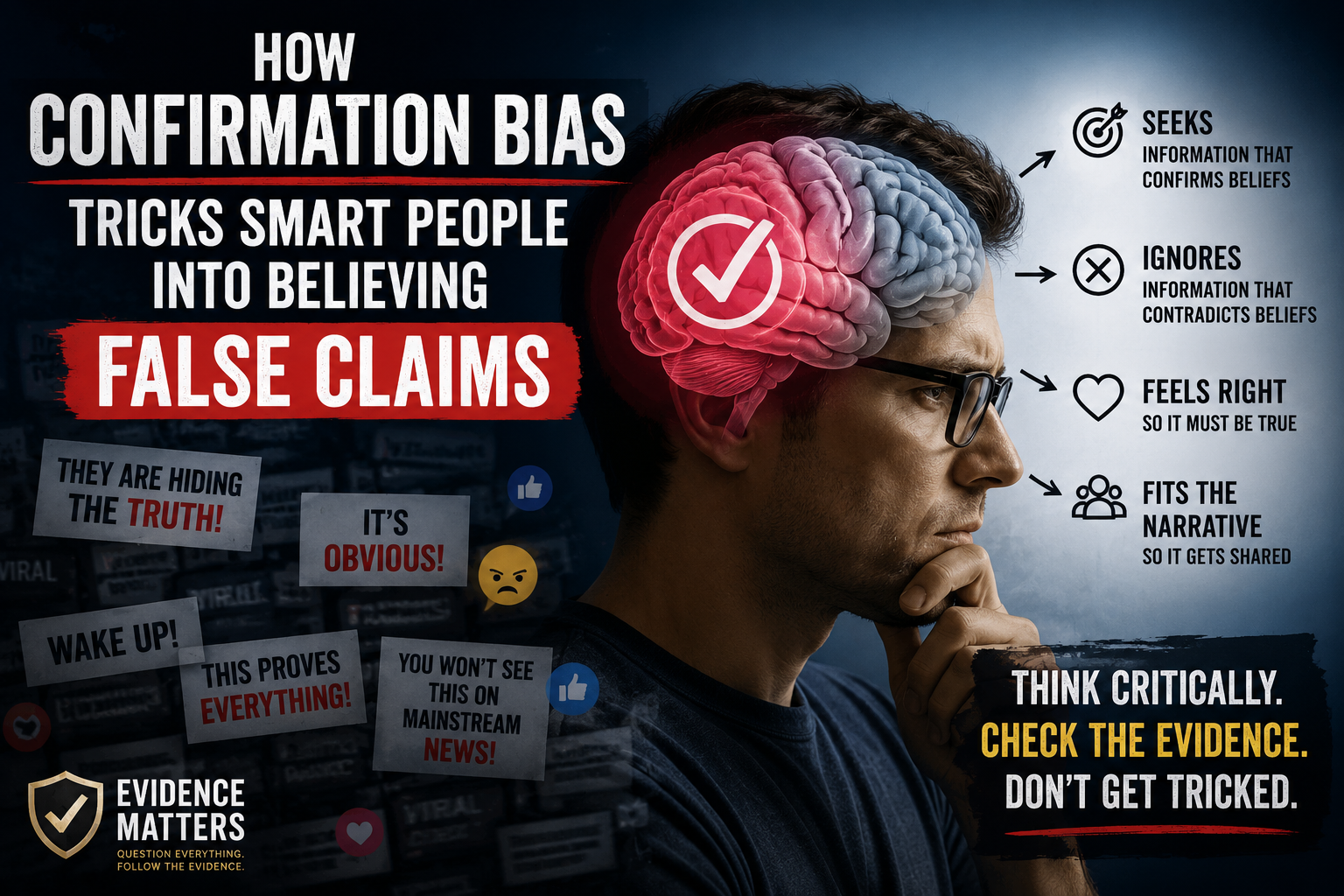
Confirmation bias is the tendency to seek information that supports existing beliefs while ignoring or dismissing information that challenges those beliefs.
- People trust sources that agree with them.
- They question sources that challenge them.
- They remember facts that support their side.
- They explain away facts that make their side look bad.
This is why confirmation bias examples can be found across every political party, education level, income bracket, and media environment.
The danger is that confirmation bias often feels like independent thinking while quietly limiting the information someone is willing to consider honestly.
Why Smart People Are Vulnerable
Intelligence does not automatically protect someone from misinformation.
In many cases, smart people become very good at defending beliefs they already hold emotionally.
Smart people are often skilled at finding selective evidence, building persuasive arguments, explaining away contradictions, and defending emotional beliefs with logic.
That means intelligence alone is not enough. Critical thinking requires the ability to test your own beliefs honestly, even when the evidence feels uncomfortable.
For a stronger evidence standard, read the Evidence Matters guide on what counts as evidence in a claim.
Confirmation Bias Example: Viral Political Clips
One common example involves short political video clips online.
A person sees a short clip that appears to confirm something they already believe about a politician or public figure.
Because the clip feels emotionally satisfying, they immediately accept it as true and share it.
Later, the full video may show missing context, edited statements, cut off explanations, or a different timeline.
But by then, the emotional reaction has already spread faster than the correction.
This is one of the clearest confirmation bias examples because the viewer accepts the clip before checking the full record.
Social Media Algorithms Make Confirmation Bias Worse
Social media companies reward engagement, not accuracy.
Algorithms quickly learn what makes users angry, what keeps people scrolling, which political stories trigger emotion, and what content reinforces personal identity.
Over time, users can become trapped inside information bubbles where they repeatedly encounter the same beliefs and emotional narratives.
Repetition starts to feel like proof.
That is why people need to slow down and learn how to verify news sources before sharing claims online.
Why Video Clips Spread So Quickly Online
Short emotional clips spread quickly because they trigger instant reactions before people verify the full context or original evidence.
Many viral misinformation campaigns depend on edited clips, emotional framing, and confirmation bias to increase engagement.
A clip can be real and still be misleading if the most important context has been removed.
Confirmation Bias and “Do Your Own Research”
“Do your own research” sounds smart, but real research requires honesty.
Watching videos that all tell you what you already believe is not critical thinking.
Real research means checking multiple sources, reviewing primary evidence, testing contradictory information honestly, and following facts even when uncomfortable.
Many people confuse repetition with proof. Seeing the same claim repeated by dozens of accounts online does not automatically make the claim true.
For a more practical process, see how to fact check political claims.
How Confirmation Bias Fuels Misinformation
Misinformation spreads faster when it confirms emotional beliefs people already hold.
Claims that trigger fear, outrage, loyalty, or anger usually spread faster than careful fact checking because emotional content creates stronger engagement online.
That is one reason false stories can survive long after they have been publicly corrected.
The emotional reward becomes more powerful than the evidence.
How to Fight Confirmation Bias
Nobody completely eliminates confirmation bias, but people can reduce its influence.
- Read sources outside your comfort zone.
- Check primary documents whenever possible.
- Ask what evidence would change your mind.
- Slow down before sharing emotional content.
- Apply the same evidence standards to every side.
Critical thinking is not about distrusting everything. It is about testing claims honestly and consistently.
The best confirmation bias examples are not just examples of other people being wrong. They are reminders to check ourselves too.
Final Thought
The danger of confirmation bias is that it feels rational while quietly narrowing what someone is willing to believe.
Smart people can be wrong. Viral claims can be false. Popular narratives can collapse under scrutiny.
Evidence matters more than emotional comfort.
Additional Reading and Research
Readers interested in learning more about confirmation bias, misinformation, and media literacy can review research and reporting from these sources.
How we rate claims: See the Evidence Matters Verdict System