Corruption Allegations During the Trump Administrations
Trump administration corruption allegations involve business conflicts, ethics complaints, criminal cases tied to allies, impeachment records, and claims that public power was used for private or political benefit.
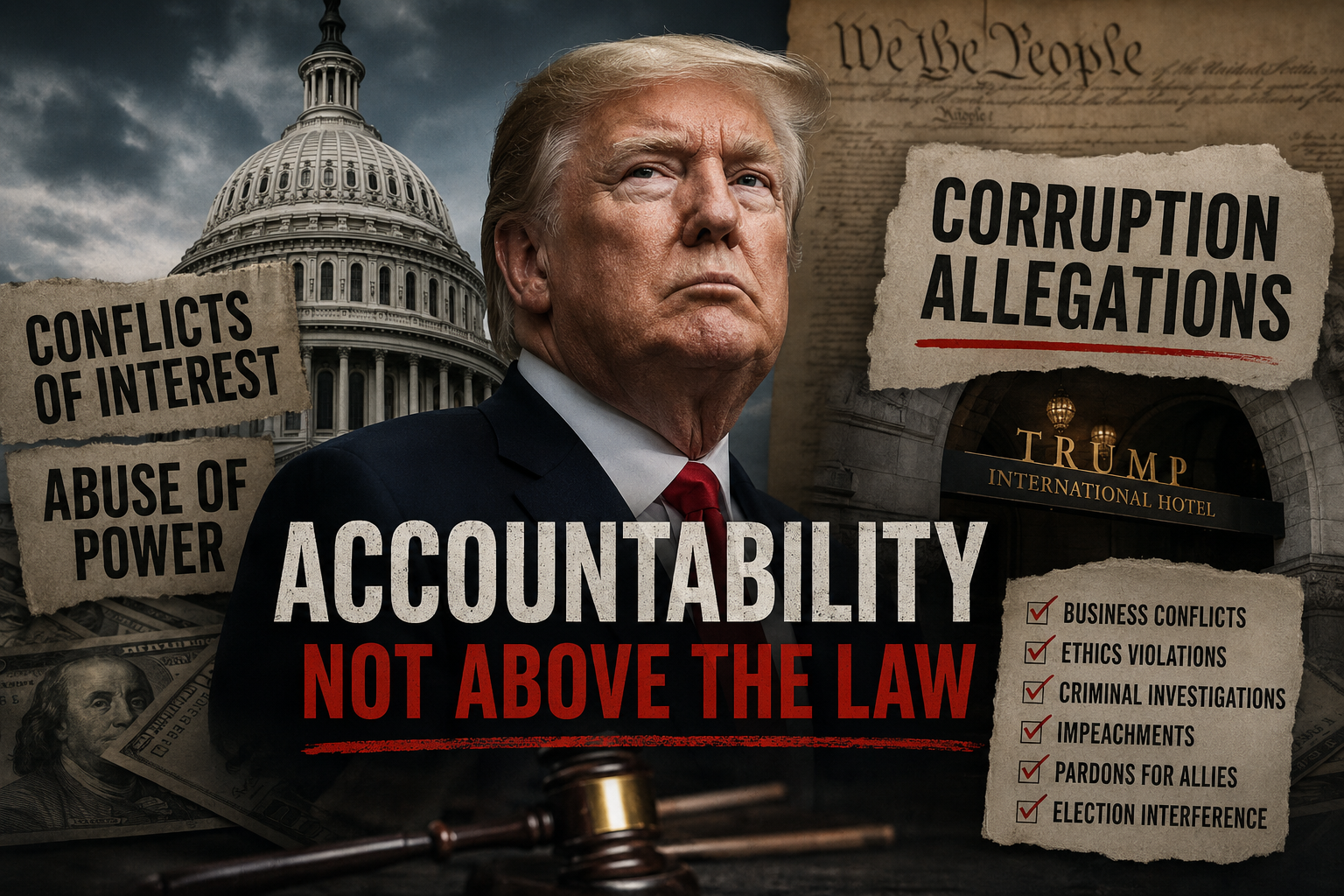
Trump administration corruption allegations became one of the biggest political accountability stories in modern American history. Supporters often argue the investigations were politically motivated. Critics argue the pattern showed repeated conflicts of interest, abuse of power concerns, and efforts to blur the line between public office and private gain.
Trump administration corruption allegations are not limited to one scandal or one investigation. They include business conflicts, impeachment records, ethics complaints, criminal cases tied to allies, election pressure campaigns, and ongoing questions about whether public power was used for private or political benefit.
Trump Administration Corruption Allegations: Why the Debate Became So Large
Every administration faces criticism and scandal. What made the Trump years different was the volume of ethics concerns, business conflicts, criminal investigations surrounding close associates, impeachment proceedings, and accusations that public office was being used for personal, political, or financial benefit.
Business Conflicts and Self Dealing Concerns
Unlike previous presidents who fully separated themselves from private businesses, Donald Trump retained ownership of the Trump Organization while serving as president.
Critics argued this created constant conflicts of interest because foreign governments, lobbyists, political organizations, and private groups spent money at Trump-owned hotels, golf resorts, and properties while Trump remained in office.
Family Influence and Nepotism Accusations
Trump appointed Ivanka Trump and Jared Kushner to major White House advisory roles. Critics argued the appointments created conflicts between national policy and private family business interests.
Cabinet and Administration Ethics Scandals
- Scott Pruitt faced investigations involving spending, travel, and ethics concerns.
- Tom Price resigned over expensive taxpayer-funded flights.
- Ryan Zinke faced investigations tied to land and ethics issues.
- Wilbur Ross faced criticism over financial conflicts.
- Michael Flynn, Paul Manafort, Roger Stone, and Michael Cohen became central figures in criminal investigations.
The Russia Investigation and Obstruction Questions
Special Counsel Robert Mueller investigated Russian interference in the 2016 election and possible obstruction of justice by the Trump administration.
The Mueller Report documented multiple episodes where investigators examined whether Trump attempted to interfere with or obstruct investigations.
Ukraine and the First Impeachment
Trump was impeached in 2019 after allegations he pressured Ukraine to investigate political rival Joe Biden while military aid was temporarily withheld.
The House impeached Trump for abuse of power and obstruction of Congress. The Senate later acquitted him.
Election Pressure Campaigns and January 6
After losing the 2020 election, Trump and allies promoted widespread election fraud claims that courts repeatedly rejected.
- Pressure on state officials to challenge election results
- The Georgia “find the votes” phone call
- Fake elector schemes
- Pressure campaigns involving the Department of Justice
- The January 6 Capitol attack
Second Trump Administration Controversies
During the second Trump administration, ethics experts, watchdog groups, journalists, and political opponents again raised concerns involving business conflicts, donor influence, retaliation claims, and changes to government oversight. These concerns should be evaluated as allegations or ethics questions unless a court, agency, or other authoritative record establishes a specific violation.
- Trump family cryptocurrency and investment ventures
- Donor influence and pay to play accusations
- Retaliation claims involving critics and law firms
- Questions about politicization of the Department of Justice
- Removal or weakening of oversight officials
- Expanded concerns about private business benefiting from political power
What Counts as Corruption?
Some people only count clearly illegal criminal conduct. Others include ethical violations, abuse of power, conflicts of interest, self dealing, or behavior that damages public trust even if technically legal.
How to Evaluate Trump Administration Corruption Allegations
The best way to evaluate Trump administration corruption allegations is to separate proven facts from accusations, read the primary records when possible, and apply the same standard to every politician regardless of party.
Why Evidence Still Matters
Political loyalty often changes how people evaluate evidence. The same behavior many voters would condemn from one politician gets defended when their preferred side does it.
That is why Trump administration corruption allegations should be tested with documents, court records, official reports, and consistent standards instead of partisan excuses.
How we rate claims: See the Evidence Matters Verdict System