
ELECTION INTEGRITY
Did Trump's Election Integrity Speech Prove the 2020 Election Was Stolen? What the Evidence Shows
A vulnerability is not evidence of an attack. Foreign influence is not proof of changed votes. Losing an election is not election fraud.
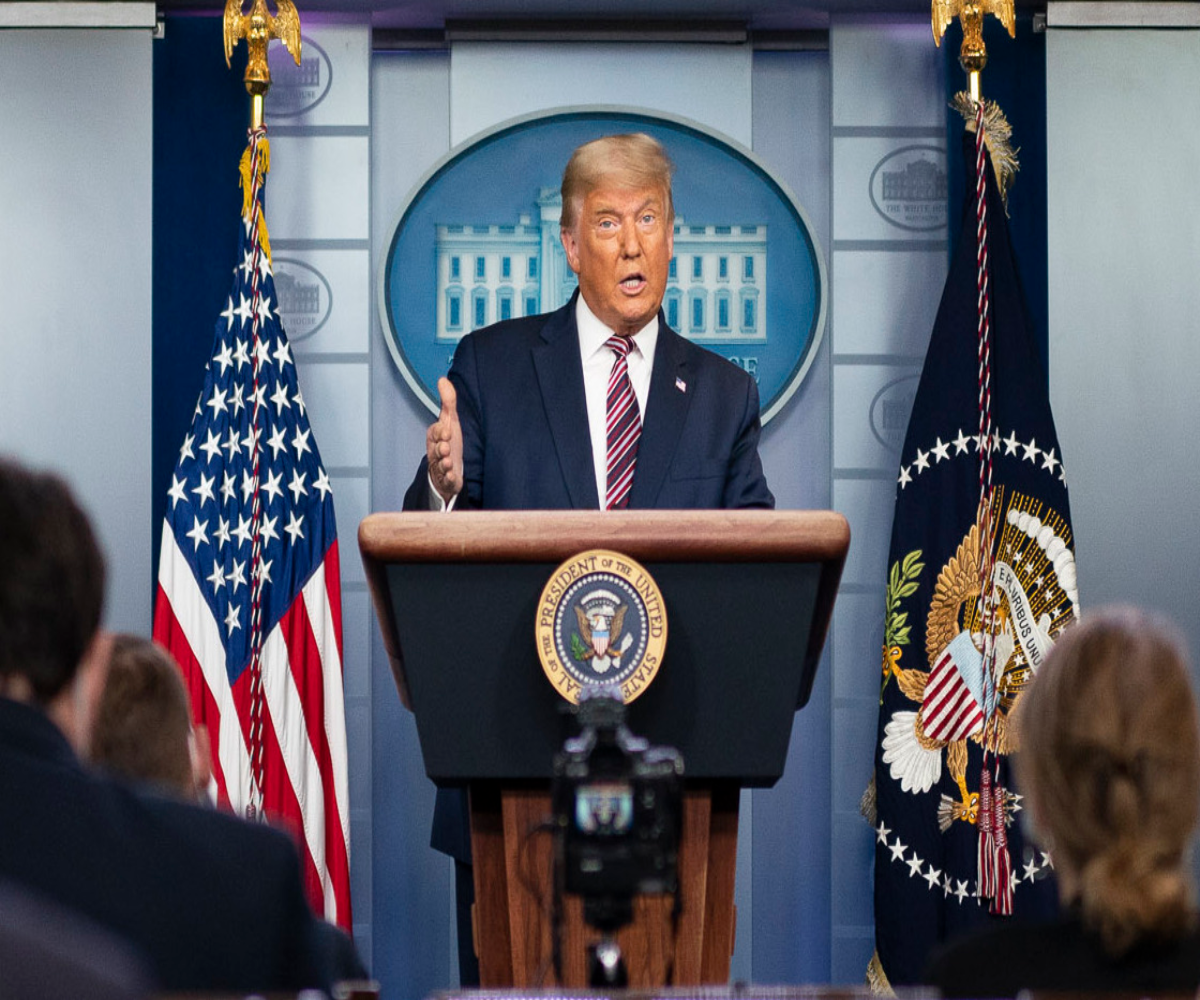
Trump election integrity speech claims raised important questions about voting system security, foreign influence, suspicious registrations and voter roll accuracy.
What the speech did not provide was evidence proving that enough illegal votes, discarded ballots or manipulated machines changed the certified 2020 election result.
Donald Trump promised Americans a major election-integrity case.
What he delivered was a collection of security concerns, foreign influence reports, questionable voter registration applications and allegations that still failed to answer the central question for evaluating the claim.
The answer remains the same.
None.
This Evidence Matters analysis was inspired by Hawk’s review of Trump’s speech. Watch Hawk’s full video commentary on YouTube.
The Trump election integrity speech presented voting system vulnerabilities, foreign access to voter information, suspicious registration applications and possible noncitizens on voter rolls as pieces of a much larger scandal.
But allegations are not automatically evidence.
A vulnerability is not proof that someone exploited it.
Access to voter information is not proof that someone altered voter information.
A fraudulent registration application is not a fraudulent vote.
A foreign influence campaign is not proof that a foreign government changed vote totals.
These distinctions are not minor technicalities. They are the difference between investigating a legitimate security concern and falsely declaring an election stolen.
Trump Election Integrity Speech: What the Evidence Actually Shows
The Trump election integrity speech discussed real categories of risk.
Elections can be targeted by hackers.
Foreign governments can attempt to influence voters.
Fraudulent registration applications can be submitted.
Voter databases can contain inaccurate or outdated information.
None of those facts prove that the 2020 presidential result was wrong.
Evidence of a possible threat is not evidence that the threat succeeded.
Evidence of attempted misconduct is not proof that an illegal vote entered the final count.
Evidence of inaccurate registration data is not proof that the person voted.
The Trump election integrity speech should be evaluated by what its documents establish, not by how alarming the allegations sound.
Evidence Matters standard: Identify the specific system, the specific intrusion, the specific ballots affected, the number of votes changed and whether the verified total exceeded the certified margin.
The Trump Election Integrity Speech Blurred Three Different Claims
The Trump election integrity speech repeatedly blurred three separate questions.
Are American elections potential targets for foreign governments and hackers?
Yes.
Have foreign governments attempted to influence American voters?
Yes.
Is there evidence that a foreign government changed enough votes to alter the result of the 2020 election?
No.
Foreign adversaries possess tools that could threaten parts of American election infrastructure. That is a real concern. Election officials should take it seriously.
But discussing a possible capability is not the same as proving that the capability was successfully used.
You cannot quote the warning while ignoring the absence of evidence that votes were changed.
Nothing in the Trump election integrity speech proved that a foreign government altered certified vote totals.
A Vulnerability Is Not Evidence of an Attack
Every computer system has vulnerabilities.
Banks have cybersecurity vulnerabilities. That does not prove your checking account was emptied.
Airports have security vulnerabilities. That does not prove every passenger carried a weapon onto a plane.
Voting systems also have vulnerabilities. That does not prove someone hacked them, changed votes or altered an election result.
Evidence would need to show that a specific person or organization accessed a specific election system, performed a specific action and caused a measurable change in the certified results.
The Trump election integrity speech did not provide that evidence.
Trump adviser John Solomon made the problem even clearer after the speech. Solomon acknowledged that the intelligence community had zero evidence that a foreign power flipped a vote in 2020, 2022 or 2024.
That should have ended the argument.
The evidence does not show that foreign powers flipped votes.
The election is still treated as suspicious because Trump lost.
The Trump election integrity speech did not prove that voting machines flipped votes from Trump to Biden.
Foreign Influence Is Not Vote Manipulation
Foreign governments have repeatedly attempted to influence American voters.
They spread propaganda. They use fake accounts. They amplify division. They steal or purchase information. They attempt to manipulate public opinion.
That is election interference in the broad sense of influencing voters.
It is not the same claim as breaking into voting equipment and changing ballots.
Both problems matter.
They require different evidence.
Evidence of propaganda does not prove altered vote totals.
Evidence that voter information was obtained does not prove fraudulent ballots were created.
Evidence that another country preferred one candidate does not prove that country secretly changed the certified result.
The Trump election integrity speech discussed foreign influence but did not connect that influence to changed vote totals.
Obtaining Voter Data Does Not Prove Election Fraud
Trump claimed that China acquired information connected to millions of American voters.
That sounds terrifying until you ask what information was obtained, how it was obtained and what China supposedly did with it.
Much voter registration information is public or legally available for purchase.
Depending on the state, voter files can include names, addresses, party registration and voting history.
Campaigns, political parties, researchers and commercial companies regularly obtain this information.
Foreign access to voter information could support an influence operation or another harmful activity. It should be monitored and investigated.
But the Trump election integrity speech did not present evidence that China used the information to create fraudulent ballots, alter voter registrations, change vote totals or prevent eligible voters from voting.
Foreign influence is a serious national security problem.
It is still not proof that voting machines changed votes.
The Michigan Registration Case Shows Safeguards Working
Trump also pointed to suspicious voter registration applications discovered in Muskegon, Michigan, before the 2020 election.
This incident deserved an investigation.
Some applications reportedly included false names, incorrect information or signatures completed by canvassers.
Election officials detected the problems before the applications produced improper ballots.
Investigators did not establish that fraudulent votes were cast because of those applications or that the incident changed the election result.
That is not evidence that the election system failed.
It is evidence that safeguards identified suspicious applications.
Election integrity does not mean no one ever attempts fraud.
It means suspicious activity is identified, investigated and prevented from affecting the count.
The Trump election integrity speech blurred the difference between voter registration problems and illegal voting.
Being Registered Is Not the Same as Voting
Trump also discussed possible noncitizens appearing on voter registration lists.
Every credible allegation involving an ineligible registration should be investigated.
But appearing in a database is not the same as casting an illegal ballot.
A person can appear on an outdated voter list without voting.
A database can incorrectly identify a citizen as a noncitizen.
A naturalized citizen can appear as a noncitizen in an older government record.
Different people can share similar names, addresses or identifying information.
These cases should be reviewed individually.
They should not be presented as proof of hundreds of thousands of illegal votes without evidence that ballots were actually cast.
Registration is one claim.
Voting is another claim.
Changing an election result is an even larger claim.
Each claim requires its own evidence.
The Trump election integrity speech did not identify enough unlawful ballots to change any decisive state result.
Courts Already Asked Trump for Proof
Trump and his allies had repeated opportunities to present evidence after the 2020 election.
They filed challenges across several states.
Judges examined their allegations.
Some of those judges were appointed by Trump.
The problem was not that every court refused to listen.
The problem was that the cases did not establish widespread fraud capable of changing the outcome.
Trump has continued making the accusation long after failing to prove it in the institutions designed to evaluate evidence.
That is not how legitimate election challenges are supposed to work.
You do not begin with a conclusion, fail to prove it and then spend years searching for something that makes the conclusion sound possible.
You begin with evidence.
The Trump election integrity speech repeated allegations that had already been examined through audits, recounts, investigations and court proceedings.
MAGA’s Definition of Democracy Depends on Who Wins
The Trump election integrity speech was not only about election security.
It exposed a larger pattern.
When Trump wins, the election is treated as legitimate.
When Trump loses, the system becomes corrupt.
When courts reject his claims, the courts become part of the conspiracy.
When election officials certify the results, they are accused of hiding fraud.
When investigations find no outcome changing misconduct, supporters are told the investigation must have been compromised.
The allegation survives every failed test because the allegation is not being driven by evidence.
It is being driven by the desired conclusion.
Real democracy requires accepting that your candidate can lose.
It allows recounts, audits, investigations and court challenges.
Once those processes are completed, losing candidates have a responsibility to acknowledge the evidence.
Democracy cannot function when one political movement reserves the right to declare every defeat fraudulent.
Real Election Security Requires Precision
None of this means election systems should be trusted blindly.
Voting technology should be tested.
Voter rolls should be maintained.
Suspicious registrations should be investigated.
Foreign influence operations should be exposed.
Paper ballots should be preserved.
Audits should be routine and transparent.
Officials who commit crimes should be prosecuted.
But every claim must be described accurately.
A risk is a risk.
An attempt is an attempt.
A registration error is a registration error.
An illegal vote is an illegal vote.
A stolen election is a stolen election.
You cannot combine unrelated concerns into a pile and call the pile proof.
The central problem with the Trump election integrity speech was not its call for stronger security.
The problem was the attempt to present possible risks as proof of a stolen election.
Trump Election Integrity Speech Conclusion
The Trump election integrity speech did not prove that the 2020 election was stolen.
It showed that election systems face potential threats.
That has never been seriously disputed.
It showed that foreign governments collect information and attempt to influence Americans.
That has also been publicly documented for years.
It showed that suspicious activity sometimes occurs and must be investigated.
What it did not show was evidence that enough illegal votes were cast, enough legal votes were discarded or enough machines were manipulated to change the certified result.
That is the claim Trump has been making since 2020.
That is the claim he still has not proved.
The Trump election integrity speech did not change the certified result showing that Joe Biden won the 2020 presidential election.
The $10,000 Truth Challenge
The Evidence Matters $10,000 Truth Challenge remains open for the same reason.
Bring the records.
Bring the authenticated documents.
Bring the verified ballots.
Bring the admissible testimony.
Bring evidence that survives scrutiny.
View the $10,000 Truth ChallengeAn allegation is not proof.
Losing is not fraud.
How we rate claims: See the Evidence Matters Verdict System